
Salina City Directory Shelves
For historical work, Salina is reached through the Syracuse city-directory collection at the Onondaga County Public Library Central Local History/Genealogy room. OCPL describes those as Syracuse directories, not as a standalone Town of Salina run. A Salina address may appear in a suburb listing or it may not be included in a particular volume. That jurisdiction check comes first. The public collection description gives an overall run from 1844 to the present with gaps, split between microfiche for 1844 through 1860, microfilm for 1862 through 1935, and paper for 1936 forward. FamilySearch supplies a digitized route for material through 1923, subject to its account or center access rules.
| Collection | Years | Where held | Access |
|---|---|---|---|
| Syracuse directory volumes | 1844 to present, with gaps | OCPL Central LHG | Microfiche, microfilm, and paper by era |
| Early Syracuse directory run | 1844 to 1860 | OCPL Central LHG | Microfiche, in room |
| Middle directory run | 1862 to 1935 | OCPL Central LHG | Microfilm, in room |
| Later directory run | 1936 to present | OCPL Central LHG | Paper volumes, in room |
| FamilySearch directory material | Through 1923 | FamilySearch catalog | Account or center restrictions can apply |
| Telephone directories | 1894 to present | OCPL Central LHG | Name and address leads, with gaps |
The gaps matter as much as the shelf dates. OCPL has not published a complete publisher-by-year shelf list, and it has not published a separate year range for reverse or criss-cross directories. Confirm the title page, locality wording, and available address section in the exact volume before relying on it. A printed listing is evidence from that publication date, not proof of title or current occupancy.
Note: Syracuse postal and suburb labels can overlap with Salina, so record the municipality, street form, and volume year together.
Salina Directory Room Access
OCPL Central's Local History/Genealogy room is at 447 South Salina Street on the third floor in Syracuse. It is open Monday, Thursday, Friday, and Saturday from 9:00 to 4:45, and Tuesday and Wednesday from 9:00 to 7:15. The room is closed Sunday. Its holdings reach beyond directory books into newspapers, obituary indexes, tax rolls, cemetery and church material, county histories, atlases, vital-index leads, and special microfilm. That range makes it a practical place to resolve a name that appears only once in a directory.
Materials do not circulate. A valid OCPL card is used, and nonresidents can obtain one at the Welcome Desk. Special-storage items use call slips and card-catalog procedures; the catalog mainly covers material closed in 1983. Staff will answer brief, specific questions by phone or email. A microfilm search or photocopy request is listed at $5 whether or not an item is found, plus $1 for mailing. A digital newspaper article delivered by email is listed as no charge.
OCPL's Local History/Genealogy page shows the access point for Salina directory research.
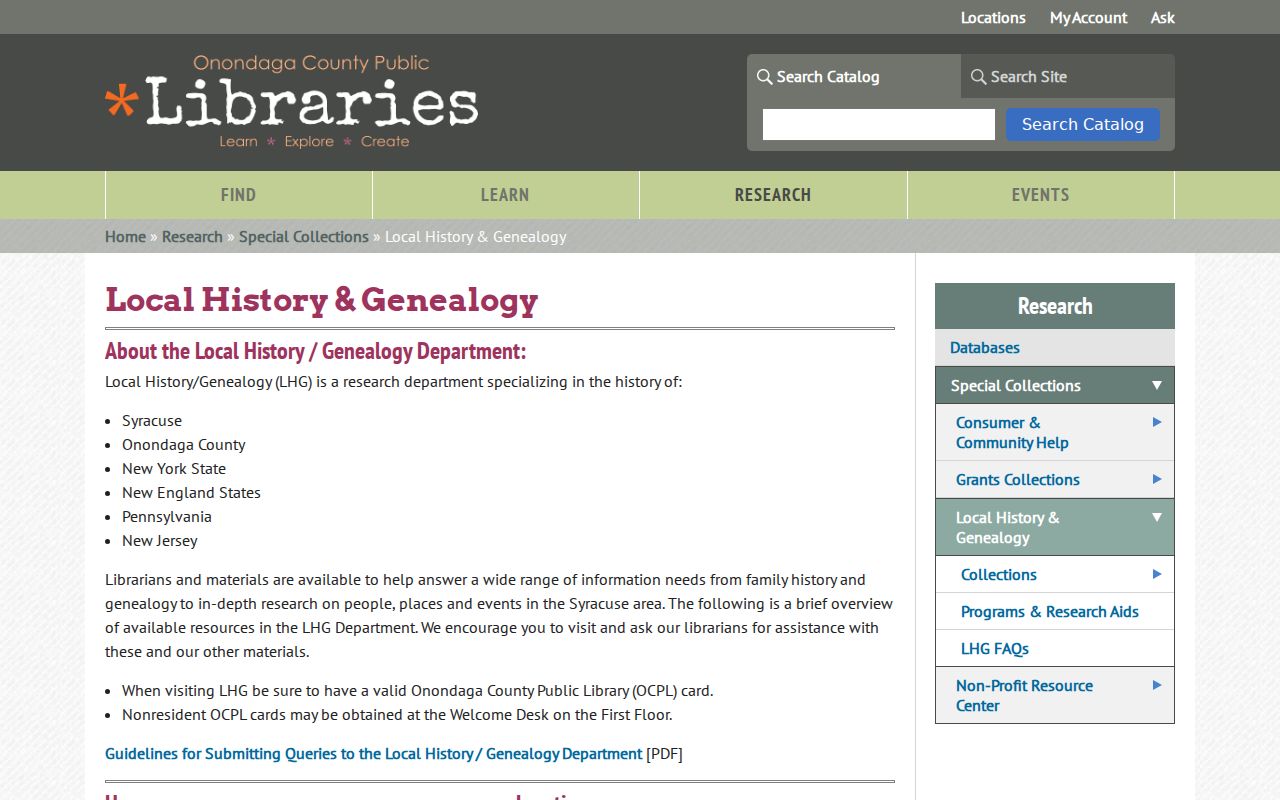
The room details support an in-person fallback when a catalog record does not expose the volume page needed for a Salina search.
Salina City Directory Catalog Leads
Two catalog records make useful, but limited, online starting points. The Boyd's Syracuse Directory 1923 catalog identifies the title and its 1923 publication year. FamilySearch notes can require an account or access through a FamilySearch Center. The Syracuse directory 1908 catalog identifies a Syracuse directory that includes Solvay and describes directory-style name and address material. Neither catalog result substitutes for inspecting the relevant line in a volume.
Use the catalog title, locality, year, and availability indicator to decide where to look next. The text capture did not expose a stable scanned page for a named Salina resident in either the 1908 or 1923 item. That is a reason to save the catalog citation and request the actual page, not a reason to fill in an entry from assumptions about directory conventions.
FamilySearch's Boyd's catalog record is the source behind the digitized 1923 lead.
The catalog screen can establish a cited title and year before the researcher moves to an accessible scan or the LHG shelf.
Salina Directory Map Context
Addresses in the directory often need geographic context. The Onondaga Historical Association collections include maps, atlases, architectural drawings, business and industry records, photographs, and civilian and military documents. OHA has collected since before 1863 and reports more than one million two-dimensional documents. These are research collections, not a universal resident index, but a map or atlas can help test whether a street form, subdivision, or industrial setting fits the directory year.
Salina's record geography is especially layered. Liverpool, Mattydale, Lyncourt, Syracuse, and North Syracuse may appear as community or postal labels while the municipal and parcel record has a different field. Keep the directory wording exactly as printed. Do not convert a postal label into a claim that the address sat outside or inside the town without checking a contemporaneous map, parcel description, or local jurisdiction record.
OHA's collections page introduces the map and document holdings that can place a Salina printed-directory address in context.
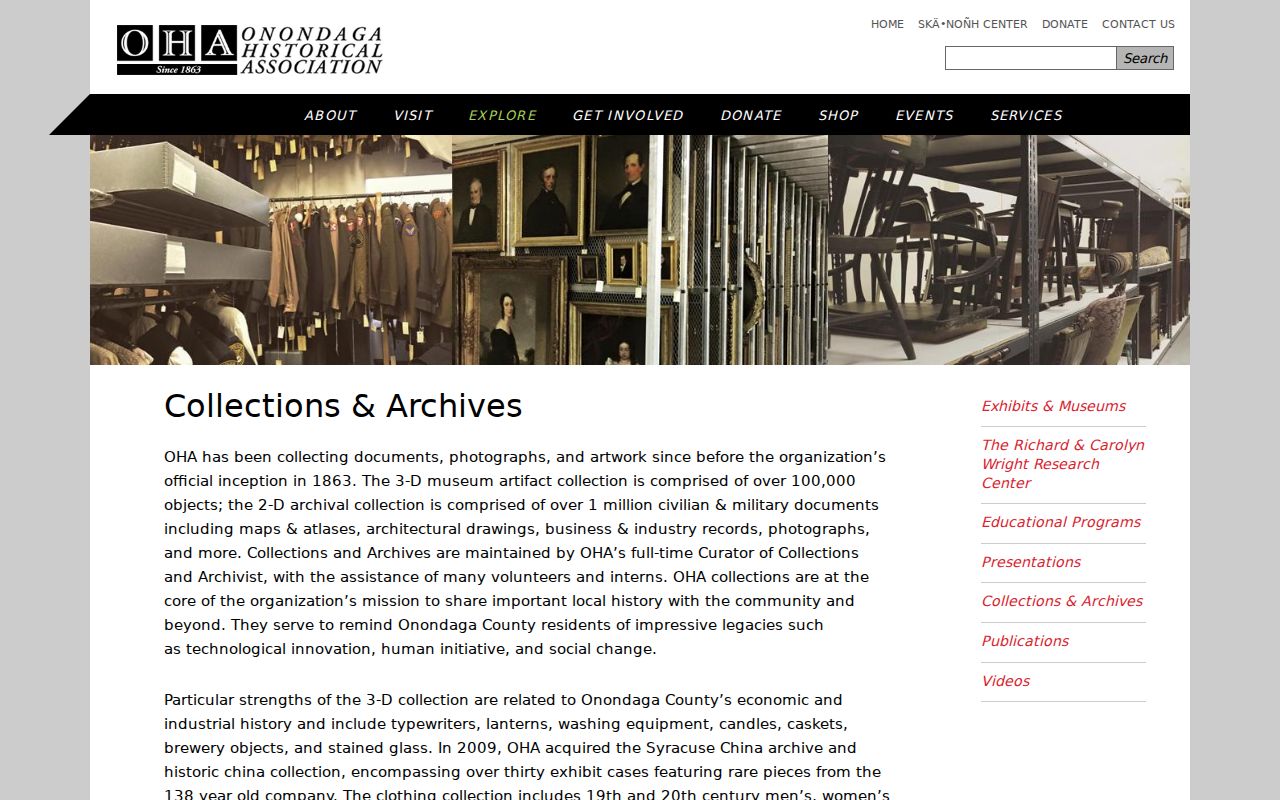
Those holdings add place and development evidence around a printed name without turning the historical association into a current resident source.
How Salina City Directory Lines Read
A usable Salina printed-directory finding begins with the exact line, not an assumed biography. The catalog and collection research support surname, given name or initial, street address, and publication year as the core identity keys. Some volumes can also show a business or occupation descriptor, spouse or household wording, widow or estate notation, and an address section. Those additional details must be transcribed from the actual scan or physical volume. The inspected text-only capture did not reveal an individual 1908 or 1923 entry, so a particular abbreviation or mark should never be promised before it is seen in that edition.
| Name form | Preserve surname, initials, and spelling exactly as printed. |
|---|---|
| Address | Copy the street form and number, then retain the volume year. |
| Household wording | Record any spouse, widow, estate, or other notation only when the line shows it. |
| Work descriptor | Capture an occupation or business detail if that edition prints one. |
| Volume citation | Keep title, locality, publication year, page, and access channel. |
- Criss-cross directory
- An address-oriented directory section or volume. OCPL has not published a separate year run, so request the year and address from LHG.
- Householder listing
- A listing that may identify one adult or name form for an address. It does not establish every person in the household.
- Abbreviation key
- The volume's own explanation of shortened terms. Photograph or transcribe it only after locating it in that edition.
When an entry cannot be read clearly, retain the page image or a copy request citation rather than silently expanding an initial or guessing a relationship.
Salina Telephone Directory Bridges
OCPL lists telephone directories from 1894 to the present. They can bridge a gap between city-directory years or test whether a name and address continued into another publication. They also have limits: an unlisted household may be absent, and a telephone-book entry is a publication snapshot rather than a complete resident roll. Search a surname, initials, and old street variation before calling a missing entry meaningful.
For an address-first question, ask LHG whether the relevant directory has a street or address section and whether a reverse or criss-cross resource survives for that year. The public descriptions do not establish a complete reverse-directory run. The current address chain belongs with the Salina street directory; historical street sections should be used here as dated printed evidence.
Salina Directory Newspaper Clues
A directory disappearance needs a second source. OCPL's Syracuse newspaper microfilm begins in 1850 and reaches to within about three months of the present, with incomplete pre-1850 coverage. Its obituary index spans 1860 through 1996 but is incomplete. NewsBank full text is listed from 1986 forward at the library, and NewspaperArchive offers historical indexed material through library or web-database access. Local clippings run roughly from the 1950s into 2002.
Search the last known directory year, the next available year, and a small date range between them. An obituary, notice, marriage announcement, or business item can explain a move, death, or family connection, but it should be cited as its own source. A missing directory listing can also reflect an unlisted household, an initials-only entry, or a gap in the publication sequence.
Note: The obituary index is a lead to an article or citation, not a complete account of every Salina death.
Salina Family Indexes Beyond Directories
OCPL's one-of-a-kind databases add unusually deep local name leads. The Timeline database covers 1654 through 1994 with 1,846 records. Vitals has 10,632 records. WPA files cover 1814 through 1900 with 52,882 records, and Woodlawn Cemetery selected deaths cover 1838 through 1999 with 46,034 records. The Woodlawn results can include a name, death date, and lot or section. OCPL notes that remains were transferred to Assumption Cemetery in 1966 and that the database was compiled from parish and funeral-director material.
Results include citations and may be requested by email. One-of-a-kind database print copies are listed at $0.25 per page plus $1 mailing. These indexes are strong family-history companions to historical volumes because they can provide a date, cemetery clue, or local citation when a name leaves an address list. They are not a replacement for a full city-wide resident list.
Tracing Salina City Directory Families
Follow one household with a dated sequence rather than treating one listing as a life story. Start with the known spelling, street, and year. Search surrounding years at two- to five-year intervals when the volumes permit it. Try surname-first forms, initials, married or widowed forms, and street-name variants. When the surname is unknown, ask LHG about the street or address section for the particular year. Each hit should carry the title, year, page, and the spelling printed there.
- Find the first available directory listing and copy its name, address, and page citation.
- Move forward and backward through available years, recording changes without assuming why they occurred.
- Check an address section or ask LHG for a reverse or criss-cross lead for that same year.
- Pair the dated listing with the nearest released federal census, allowing for the census date and publication lag.
- Test the endpoint in newspapers, the obituary index, cemetery databases, probate, and property records.
The local County Clerk Archives hold census material from 1850 through 1925. Federal census releases currently extend through 1950 under the 72-year rule. Census composition and a directory entry answer different questions, so keep both dates visible. For a modern identity question, use a separate Salina resident lookup rather than stretching an old listing beyond its date.
Salina Directory Time Markers
The library collection's dates give a practical timeline for choosing a format and a companion source. Salina was incorporated in 1847, but older directories and newspapers often use Syracuse-area community or postal labels. The labels are evidence to compare, not a shortcut around jurisdiction research. The historical trail is layered: local social history lives on the library shelf, while ownership rests in county assessment and deed records.
- 1844: OCPL's Syracuse directory run begins, with later gaps.
- 1844 to 1860: the early run is held on microfiche.
- 1862 to 1935: directory material is held on microfilm.
- 1894: OCPL's telephone-directory run begins.
- 1936 forward: later directory volumes are held in paper.
Exact publisher changes are not fully enumerated on the public OCPL pages. The title page of the particular volume remains the source for publisher confirmation. Note: Preserve the original title and locality because a catalog description alone may not settle which Salina areas the volume covered.